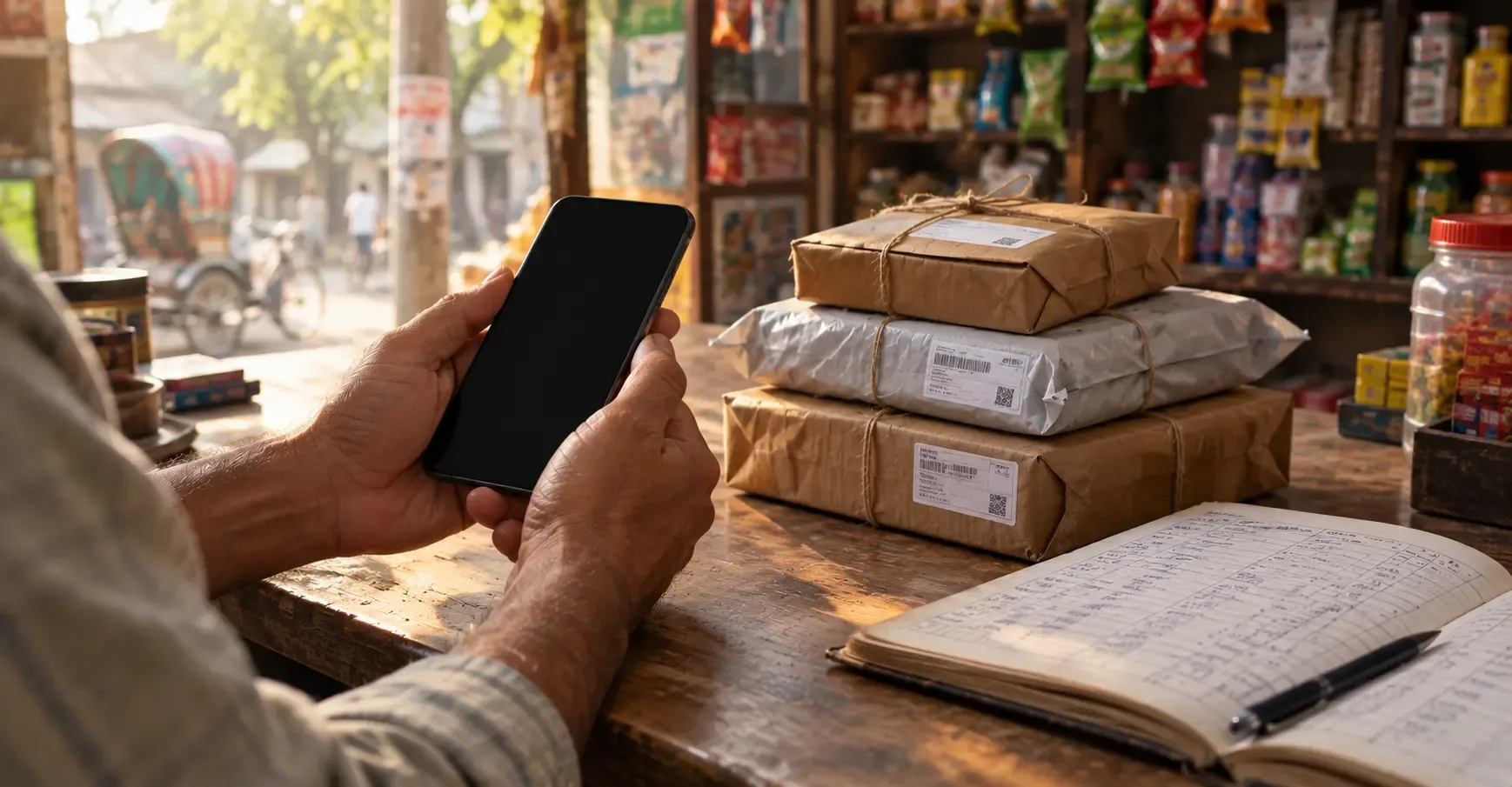
Getting repeat customers from chat orders starts with one habit: saving every buyer as a record the moment they order, with their phone number and what they bought. Without that record, a returning buyer looks like a stranger. With it, you know who to message, and when.
Why repeat buyers turn back into strangers
When you sell over chat, the conversation is where every sale lives. The buyer's address and the size they chose are somewhere in a long scroll, between dozens of other chats. Nothing marks the buyer as someone you have served before.
Two things cause most of the damage. First, no record is created at the moment of the order, so the only trace of the customer is the chat itself. Second, when an order does get copied out, it usually goes into a notebook or a spreadsheet as a line about the order, not as a profile of the person. The next time that person writes, you are starting from nothing.
None of this means you are careless. Chats move fast, and the record is always the thing that waits.
What a missing record costs you
The costs are quiet, which is why they are easy to ignore.
- You cannot tell a returning buyer from a new one, so you greet both the same way.
- You cannot suggest anything based on what someone bought before, because finding it means scrolling through old messages.
- You spend time retyping orders by hand, and details like size, color, or address get lost or confused along the way.
- You have no list of past buyers to contact when something new arrives.
The sale you have already won once is usually the easiest one to win again. The buyer knows your shop and has already paid you. That only helps if you can find them.
How to get repeat customers from chat orders, step by step
You do not need special software to begin. You need a consistent way to record buyers and a reason to contact them again. Each step below is a behavior you can start today.
Start with your recent buyers
Do not try to rebuild your whole history. Go back through the chats from the last few weeks and save each buyer you find. A short, accurate list of recent customers is more useful than a long, incomplete one.
Save the buyer when they order, not later
From now on, make the record part of taking the order. As soon as someone says they want to buy, save their name and phone number before you do anything else. Write phone numbers in one format every time. If one entry has a country code and another does not, the same person ends up as two customers.
Record what they bought
Under each buyer, note the item, the variant such as size or color, and the date. This small habit changes how you talk to people. Instead of asking a returning customer what they are looking for, you can write, "Last time you took the blue one in M. Want the same again?"
Give every buyer a stage
Pick a few simple labels and move people between them as things change. A set like this is enough:
- New lead: asked a question but has not decided.
- Hot lead: ready to buy.
- Customer: has bought at least once.
- Cold lead: went quiet.
At a glance, the stages tell you who needs a nudge this week and who simply needs a thank you.
Add one short note and a tag
Write down anything the buyer tells you that will matter next time, such as a delivery preference or that they usually buy gifts. Keep it to one line. Use tags to group people, for example by the product they bought. A tag turns "everyone who bought the blue t-shirt" from a memory exercise into a list.
Follow up with a reason
Contact past buyers when you have something relevant to say: an item they asked about is back in stock, or a new variant of something they bought has arrived. A message that mentions what they bought last time reads like a shop that remembers them. Send it to the few people it applies to rather than to everyone.
How to tell it's working
Check yourself against a few simple signals:
- When a customer messages, you can open their record and see their last order without scrolling.
- You can name, without searching, which buyers you would contact this week.
- The number of people in your Customer stage grows from one week to the next.
- You notice returning buyers by name, and they notice that you did.
If the first signal is not true yet, the problem is almost always step two. Records created later, from memory, tend to be thin or missing.
When this doesn't apply
If what you sell is bought once, such as a single large item, there is little to repeat, and your effort is better spent on winning the first order. If you only have a handful of buyers in total, a notebook is enough for now. Everything above starts to matter once the same faces keep coming back and you can no longer hold them all in your head.
If you would rather not keep these records by hand, OrderPilot creates a customer record from the first message and keeps their phone number and order history together with a lifecycle stage.