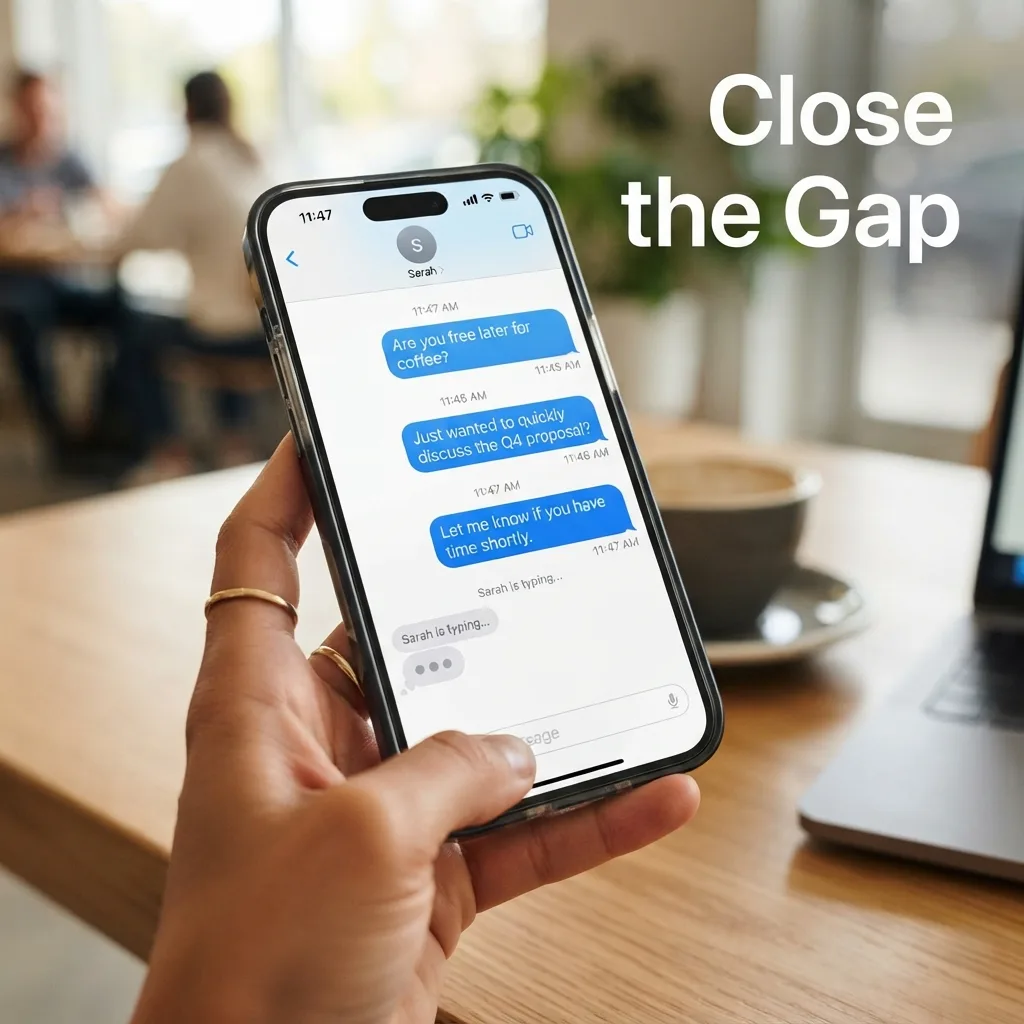
Closing the 'I'll get back to you' gap requires shifting from manual message tracking to an immediate, automated checkout process within the chat. When a lead stops responding after a price quote, it is usually because the friction of waiting for a human to confirm availability or calculate totals kills the buying impulse.
Why the response gap happens
The gap occurs because of a mismatch between customer expectation and operational capacity. In chat-based commerce, the buyer is in a high-intent state the moment they send a message. They want a price, a confirmation of stock, and a way to pay immediately.
Most sellers operate on a reactive cycle. A message arrives, it sits in a queue, and a human responds hours later. By the time the seller asks for the shipping address or confirms the color, the customer has shifted their attention to another task or a competitor who answered faster. The "I'll get back to you" phrase is rarely a statement of intent; it is a polite way to end a conversation that has lost its momentum.
The operational cost of delayed replies
Every single minute of delay increases the probability that a lead will churn. The cost is not just the lost immediate sale, but the cumulative drain on your team's time.
When you manage orders manually, you spend hours in a cycle of repetitive questioning. You ask for the phone number, the address, and the product variant multiple times a day. This creates a maintenance overhead where the seller becomes a data entry clerk, moving details from a WhatsApp chat into a spreadsheet or a notebook. If a detail is missed during this manual transfer, it leads to shipping errors and customer disputes, further eroding the profit margin of the sale.
How to eliminate the friction today
To stop the leak in your sales funnel, you must move the transaction closer to the conversation.
• Provide instant pricing and availability. Do not make the customer wait for a manual check of your inventory. The answer must arrive while the user is still looking at the screen.
• Standardize the order collection. Instead of a back-and-forth conversation to gather shipping details, use a structured flow that captures the name, address, and phone number in one sequence.
• Centralize your channels. Stop jumping between Facebook Messenger, WhatsApp, and website chats. When a customer moves from one platform to another, the context is often lost, forcing them to repeat their request and creating a new gap in the experience.
• Automate the confirmation. Send an immediate receipt or order summary. This validates the purchase in the customer's mind and prevents the "did they get my order?" anxiety that leads to abandoned carts.
Signals that your chat funnel is improving
You can measure the effectiveness of these changes by monitoring two specific signals.
First, track your Lead-to-Order Time. This is the duration from the first "How much?" message to the final order confirmation. If this time drops from hours to minutes, your conversion rate will naturally rise.
Second, monitor your Repeat Purchase Rate. When you stop treating every chat as a fresh start and begin recognizing returning customers by their phone number and order history, you will see an increase in the frequency of orders per customer. Recognition reduces the friction of the second and third sale.
When manual handling is still necessary
Automation is not a replacement for every interaction. This approach does not apply to high-ticket, bespoke services that require deep consultation or complex technical scoping. If your product requires a 30-minute discovery call to determine the price, an automated chat bot will feel impersonal and premature. In those cases, the goal is not to automate the sale, but to automate the scheduling of the call.
OrderPilot provides an AI order desk and CRM that handles these chat conversations and takes orders automatically.
Focus on reducing the number of steps between a customer's question and their payment confirmation to ensure no lead is left waiting.