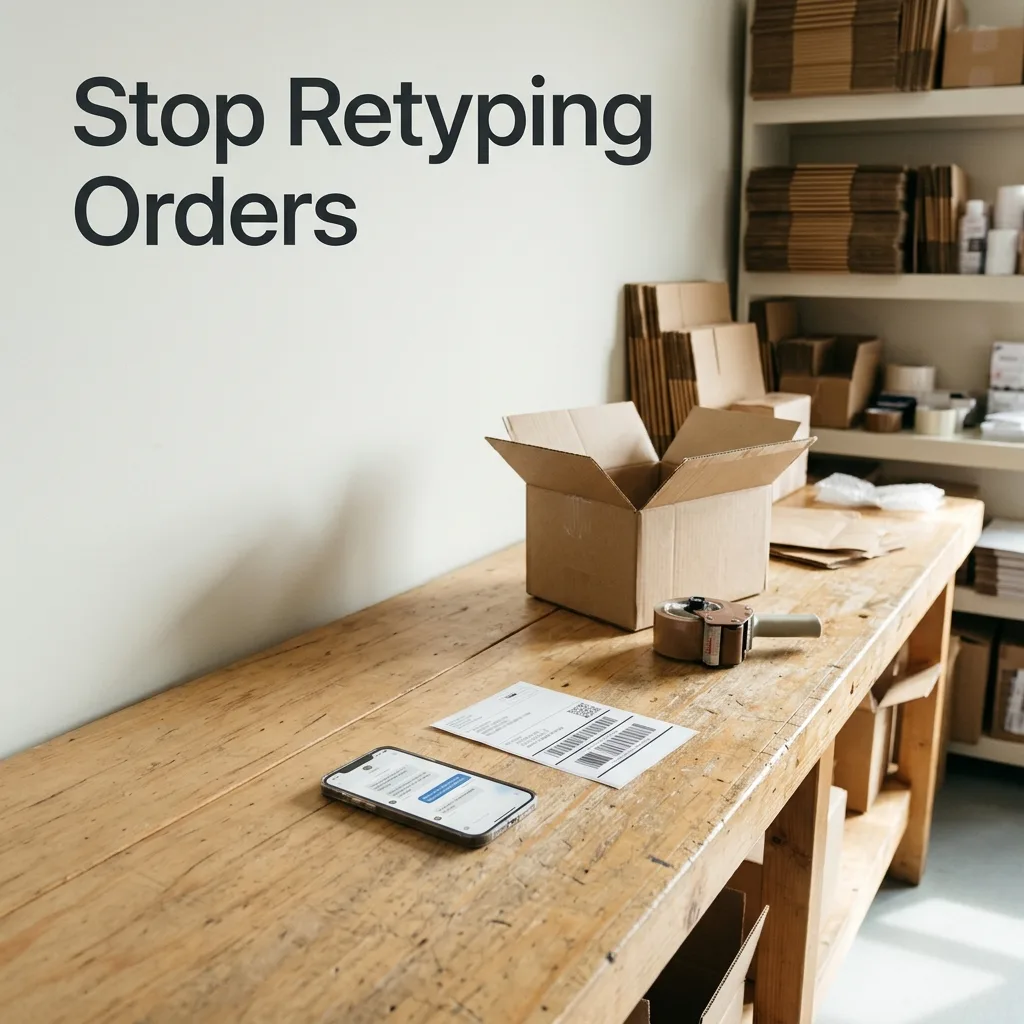
Retyping chat orders into spreadsheets slows down fulfillment and introduces preventable delivery mistakes. The solution is switching from manual transcript copying to direct in-chat order capture that turns customer messages into structured buyer records immediately, keeping inventory, addresses, and purchase histories organized without switching between phone screens and desktop tabs.
Why chat commerce creates a spreadsheet bottleneck
Selling through messaging apps like WhatsApp and Facebook Messenger feels natural to buyers because conversation is personal and immediate. For the merchant, however, that conversational freedom creates operational friction. Customers do not submit clean data fields; they send fragments across several minutes. A buyer might mention a product name in one message, specify a size two messages later, send a delivery address split across two separate bubbles, and share their phone number only after being prompted.
This informal back-and-forth leaves the order details scattered throughout a long conversation scroll. To process that transaction, someone on your team must read through the conversation, isolate the five or six essential details, highlight each snippet on a mobile screen or desktop monitor, and paste them one by one into spreadsheet columns. When sales volume picks up, this clerical task consumes hours each day. The bottleneck is not a lack of effort; it is the structural mismatch between freeform human chat and rigid table rows.
The hidden operational costs of manual transcription
Manual data entry appears free on the surface because it does not require dedicated software subscriptions, but it carries recurring operational expenses that drain cash flow.
First, manual transcription invites clerical errors that directly harm fulfillment. A single mistyped digit in a phone number prevents delivery couriers from reaching the recipient, leading to returned parcels and wasted shipping fees. An address copied without the apartment number or landmark noted earlier in the chat thread produces delivery delays and frustrated customers.
Second, manual entry creates severe response lag. When an operator spends three minutes copying rows into a spreadsheet, other inbound customer inquiries sit unread in the queue. In conversational commerce, buyers frequently message two or three sellers simultaneously; the business that answers first usually secures the sale. Spending operating hours acting as a human bridge between chat windows and desktop tables directly costs you new sales.
Third, customer history disappears once the row is filled. When a previous buyer returns three months later to order again, they look like a complete stranger in your inbox. Without instant access to their purchase history, previous sizing preferences, or past delivery issues, your staff cannot provide tailored assistance unless someone manually searches thousands of rows in an old file.
Standardizing chat intake before processing orders
If your team still relies on manual entry, you can immediately reduce transcript hunting by standardizing how you prompt customers for information. Instead of asking for delivery details in separate conversational turns, provide a clean, single-message template once the buyer confirms they want the item.
Train your team to send a structured summary message asking for confirmation:
• Full recipient name • Active contact phone number • Complete delivery address with city and district • Selected product name, variation, and requested quantity • Preferred payment method
When the customer replies by filling out this block in a single response, the time spent parsing the chat scroll drops significantly. The data sits in one place, allowing your fulfillment staff to copy the block directly into fulfillment software or your delivery partner portal without scrolling through dozens of casual exchanges.
Moving from manual copy-paste to structured chat records
Standardized messaging templates help, but human transcription still fails when message volume multiplies. To eliminate the spreadsheet entirely, transactions must be captured as structured records directly inside the communication channel.
Modern conversational commerce relies on capturing key variables—item SKU, quantity, customer phone number, and delivery destination—at the exact point of conversation. When an order is confirmed, the customer information should instantly populate an internal ledger that links the customer phone number to their order history, order status, and dispatch tracking.
This structural shift changes the role of your staff. Instead of acting as data entry clerks, your operators can focus on inventory management, dispatch coordination, and handling complex customer inquiries. Routine order data moves automatically from the dialogue into the fulfillment pipeline, eliminating human typo risks entirely.
Signals that your order intake process is stabilizing
Once you eliminate manual transcription, several clear operational markers will show that your fulfillment pipeline has stabilized:
• Zero dispatch holds caused by incomplete addresses or missing phone digits: Your packing team can generate shipping labels immediately without having to reopen customer chats to ask for clarification. • Decreased dispatch turnaround time: The duration between a customer agreeing to buy and the package receiving a courier tracking barcode drops from hours to minutes. • Instant customer recognition: When repeat buyers message your inbox, your team immediately knows what they purchased previously without opening secondary search tabs.
Monitoring these operational markers gives you direct visibility into whether your order desk is scaling smoothly or suffocating under clerical work.
When keeping a basic spreadsheet makes practical sense
Automating chat order capture is not necessary for every business model. If you operate an artisanal workshop producing bespoke, made-to-order goods where you handle fewer than five custom commissions per week, manual spreadsheet tracking remains entirely viable.
When every order involves custom design consultations, variable production timelines, and individual pricing quotes, the primary constraint is craft production rather than communication volume. In those low-volume environments, maintaining a personal spreadsheet allows for customized project notes that automated order desks are not designed to track.
For businesses selling standardized catalog items with daily incoming inquiries, however, manual copy-pasting is an unsustainable drain on growth. If you want an inbox that manages this transition natively, OrderPilot connects to WhatsApp and Facebook Messenger to take orders directly from customer chats and maintain full customer records automatically.
Eliminating the manual step between reading a message and booking an order protects your margins, reduces courier return rates, and lets your team focus on serving customers rather than updating rows in a document.