Notebook vs AI order desk comes down to volume and time. A notebook or spreadsheet is enough while you handle few chats and know every buyer. An AI order desk pays off when messages arrive at all hours and orders come from several apps faster than you can follow.
Notebook vs AI order desk: the criteria that matter
Both options do the same job: they turn a chat with a buyer into an order that is recorded, paid for, and delivered. What differs is how much of that job you do by hand. Four criteria make the difference visible.
Reply speed is how long a buyer waits for an answer, including at night and during the hours you are packing parcels.
Order capture is how reliably the details of an agreed order, such as item, size, color, quantity, phone number, and address, end up written down in one place.
Customer memory is whether you can see who a buyer is and what they bought before, without scrolling through an old chat.
Payments and delivery is whether you can tell, for each order, what has been paid, what is still due, and what is on its way.
Effort sits under all four. A method that works only when you have free time will fail on your busiest days, which are the days that matter most.
A notebook or spreadsheet: what it does well and where it stops
A notebook or spreadsheet is the default for good reasons. You already know how to use it, you decide every field, and there is nothing to set up. For a seller with a few chats a day and mostly familiar buyers, it is a reasonable record of orders, and a careful seller can run it well.
It stops at the chat itself. A notebook does not read your messages, so every order is typed by hand after the conversation ends. It does not reply, so reply speed depends on you being awake and free. It does not connect to WhatsApp, Messenger, or your website chat, so each app keeps its own inbox and you are the only link between them.
A notebook entry is also only as complete as your memory when you wrote it. A size changed halfway through the chat, a second phone number, or a new delivery address can fall out between the conversation and the page.
A spreadsheet improves on this. You can search by phone number, filter unpaid orders, and add columns for payment method and balance. It still relies on manual entry, so it stays accurate only as long as you type every field the same way. A buyer whose number is typed in two formats becomes two rows, and the history splits in half.
Neither one tells you a message is waiting. The tools record what you already handled and say nothing about what you missed.
An AI order desk: what it does well and where it stops
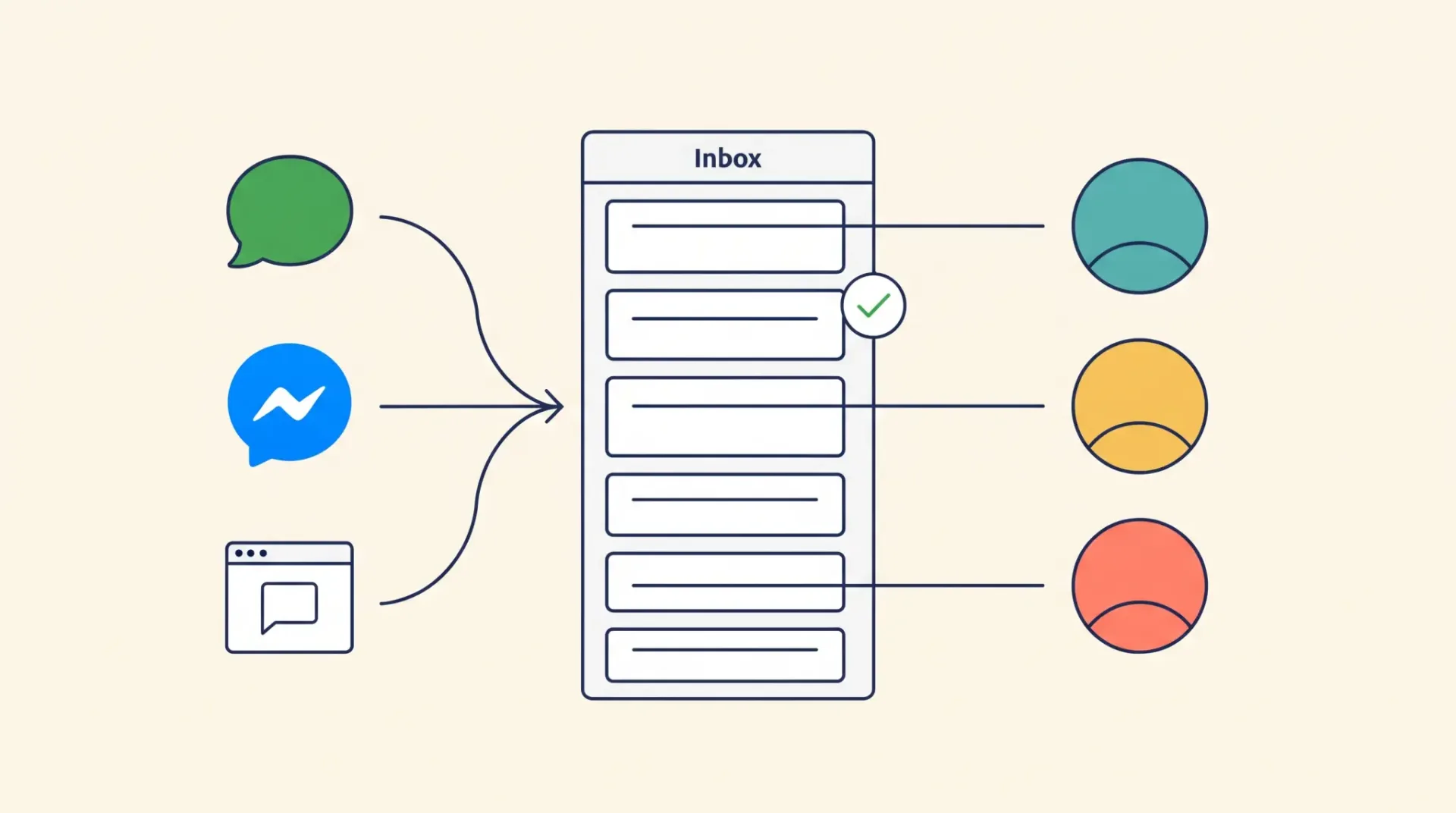
In this post, an AI order desk means a tool built for chat selling that connects to WhatsApp, Messenger, and a website chat widget, so every conversation lands in one shared inbox. A desk built for sellers in Bangladesh works in Bangla, English, and Banglish, replies at any hour, and turns an agreed order into a draft that you confirm.
Picture a buyer who writes at midnight: "bhaiya, blue t-shirt size M ta stock e ache?" The desk answers from your product catalog in the same casual style and drafts the order for you to confirm in the morning. Because the reply comes from the catalog, the AI uses the prices you set rather than inventing one. Sensitive chats are handed to a human, and you can take over any conversation at any time.
The rest of the desk covers what a notebook leaves to memory. Each buyer gets a customer record built from the conversation, so a returning customer is not a stranger. Payments from bKash, Nagad, and cash on delivery are recorded against each order, and delivery charges and fraud checks sit in the same place. A dashboard and team roles show who owns a chat and how the day is going.
The limits are real. The AI is only as accurate as the catalog and rules you give it, so a wrong price in the catalog becomes a wrong price in a reply. The desk tracks payments but does not move money, so you still collect and confirm it yourself. It needs setup before it helps, because your products have to be added, although a CSV or XLSX import saves typing them one by one. And because you confirm every order, you remove the typing and the waiting, but you still make the decisions.
Where each wins
Reply speed goes to the AI order desk. A notebook cannot reply, and a seller cannot answer at every hour. The desk responds at night, and you step in when a chat needs a person.
Order capture also goes to the desk once volume grows, because the order is drafted from the conversation instead of retyped afterward. At low volume, a careful seller with a notebook captures orders reliably, so the gap there is small.
Customer memory favors the desk as well. A spreadsheet can hold the same fields, but you have to fill them in, while the desk builds the record as the chat happens. A spreadsheet with disciplined entry gets close.
Payments and delivery are the closest contest. Both depend on someone recording whether money arrived. The desk keeps the figures per order and shows the day on a dashboard, and the spreadsheet gives you total freedom to arrange the figures however you like.
The notebook and spreadsheet win on flexibility, no setup, and no dependence on a tool. The desk wins on speed, on typing less, and on not losing a chat that arrives while you are away.
Which one to choose
Choose a notebook or spreadsheet if you handle a small number of chats, you know most of your buyers, and you reply quickly on your own. Make it work by writing each order down the moment it is agreed and repeating it back to the buyer in one message, so they can correct a wrong size before it ships.
Choose an AI order desk if any of these describe your week: messages arrive while you are asleep or busy, orders come from more than one app, you spend time retyping chats into a sheet, a team shares the chats and nobody is sure who owns which one, or you cannot say how much you collected today without opening several apps.
A simple check is to look at yesterday's chats. If any buyer waited a long time for a reply, or an order exists only in the scroll, the current method is already leaking.
If your products already live in a spreadsheet, that work carries over, because a catalog import reads CSV and XLSX files.
If you want to test a desk, OrderPilot is an AI order desk for chat sellers in Bangladesh, and its Free plan covers all three channels, 50 AI replies a month, 10 products, and 3 team members.
Test it on one product line first, and compare how many chats you miss and how much typing you do before and after.